
Most people don’t choose a mattress.
They react to one.
You walk into a store. Lie down for two minutes. Someone says “this one is best seller”. Someone else says “this is orthopaedic”. You nod, maybe sit up, maybe lie down again.
And then you decide.
It feels like a decision.
It’s not.
Because sleep is not a two-minute experience. It’s eight hours of your body negotiating with a surface. Quietly. Every night.
And the problem is, most people don’t really know how they sleep.
They think they do.
You Don’t Sleep the Way You Think You Do
Ask anyone how they sleep.
They’ll say back sleeper. Side sleeper. Maybe stomach.
Sounds clear.
It isn’t.
Because people move. A lot. You start on your side, shift to your back, turn again without noticing. What feels like one position is actually several.
So choosing a mattress based on a single “sleep style” feels neat. But it’s incomplete. You need to find the right mattress for your sleep.
Still, it’s where you begin.
Not where you end.
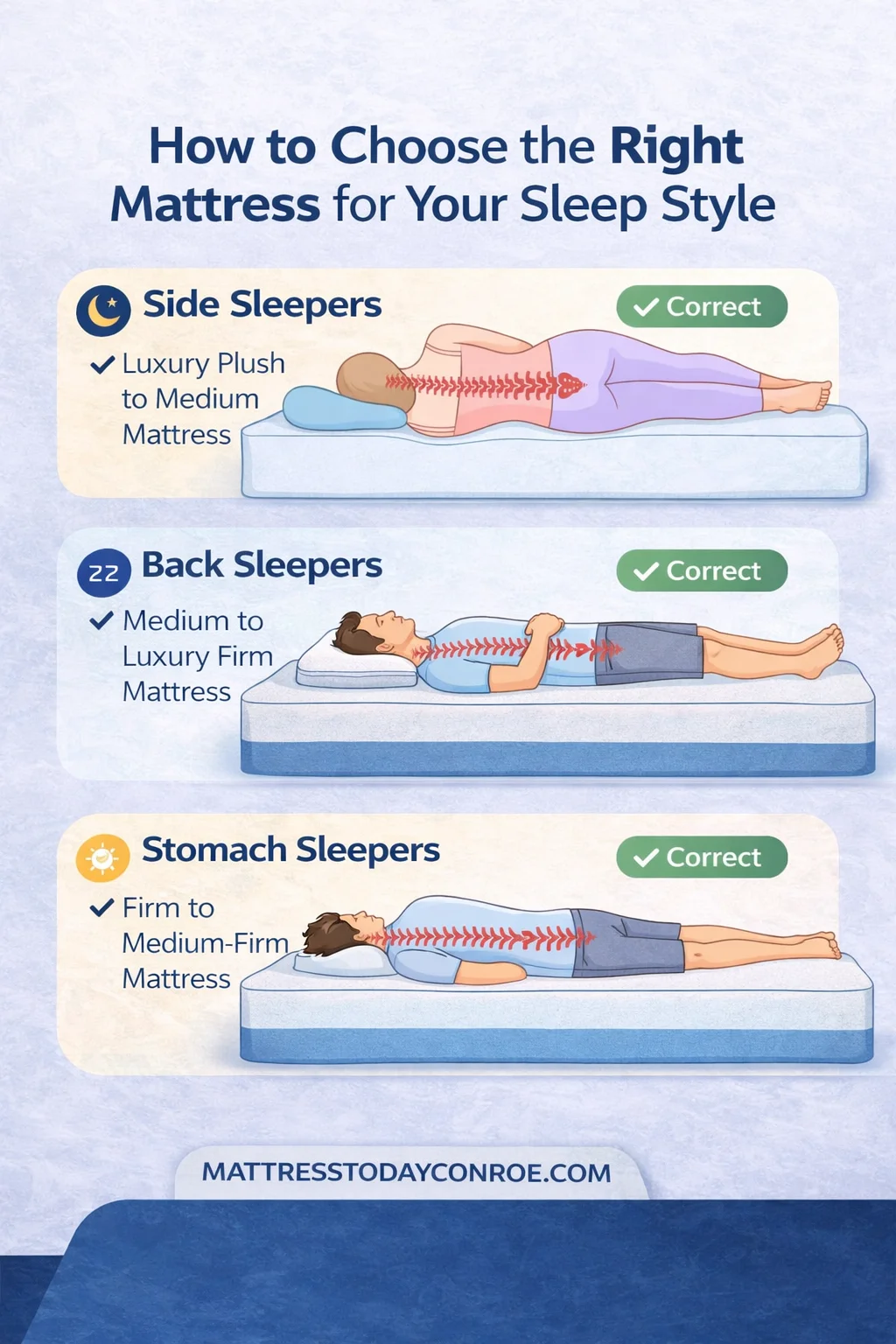
Side Sleepers: Pressure Shows Up First
Side sleeping looks comfortable.
It usually is. Until it isn’t.
Your shoulders and hips take most of the weight. Press into the mattress. Stay there for hours. If the surface is too firm, pressure builds. Circulation dips slightly. You turn. Again and again.
That restless turning? That’s your body adjusting.
Side sleepers need cushioning. Not softness for the sake of it, but enough give for shoulders and hips to sink slightly.
Too soft though, and the body dips unevenly.
So it’s not about “soft mattress”.
It’s about controlled softness.
Back Sleepers: Support Feels Subtle, But It Isn’t
Back sleepers often think they’re easy.
Just lie flat. Straight. Done.
But the lower back has a natural curve. It needs support. Not pushing. Not lifting. Just… filling that gap.
If the mattress is too soft, hips sink, the spine arches slightly. If it’s too firm, that curve isn’t supported at all.
Both feel okay for a while.
Then morning stiffness starts showing up.
Back sleepers need balance. Something that supports without forcing alignment.
You don’t notice it when it’s right.
You notice it when it’s wrong.
Stomach Sleepers: The Most Demanding Position
This is where things get tricky.
Sleeping on your stomach puts pressure on the spine. The neck turns to one side. The lower back dips more than it should.
A soft mattress makes it worse. The body sinks too much. Alignment breaks further.
Stomach sleepers need firmer surfaces. Something that resists sinking. Keeps the body more level.
But even then, it’s not ideal.
It works. But it’s not the easiest position to support properly. Find the difference between plush and firm mattresses.
Combination Sleepers: Most People Fall Here
This is the part people miss.
Most people are not strictly one type.
They shift. Side to back. Back to side. Sometimes even stomach for a while.
For combination sleepers, responsiveness matters more than firmness labels.
The mattress should adjust quickly if its from a trusted mattress store in Conroe. Not trap the body. Not feel slow.
Too much softness can make movement harder. Too much firmness can make transitions uncomfortable.
So you look for something that adapts.
Not perfect in one position. Good enough in all.
Firmness Labels Are Misleading
“Soft”, “medium”, “firm”.
These words don’t mean much on their own.
What feels soft to one person feels firm to another. Body weight changes everything. So does sleeping position.
A heavier person may sink more into the same mattress. A lighter person may feel it as firmer.
So instead of chasing labels, pay attention to feel.
Does your body settle naturally? Or do you adjust yourself to the mattress?
That’s the difference.
Not Sure What Works for You? Try It In-Store
Choosing a mattress online can feel confusing. The best way to know what truly works is to experience it.
Visit Mattress Today Conroe and let our experts guide you based on your real sleep patterns.
Materials Change the Experience
Memory foam feels different from spring mattresses. Latex feels different again.
Foam contours more. Springs bounce back faster. Hybrids try to sit somewhere in between.
None of these are universally better.
They just feel different.
Some people like that sinking feeling. Others don’t. Some want bounce. Others want stillness.
This is preference. Not performance.
The First Night Doesn’t Tell You Much
This is where expectations go wrong.
You sleep on a new mattress. It feels strange. Maybe too firm. Maybe too soft.
You assume it’s wrong.
Sometimes it is.
But often, your body is just adjusting.
You’ve been sleeping on one surface for years. Your muscles have adapted. Your posture has adapted.
Change feels uncomfortable at first.
Not always. But often enough.
Don’t Ignore What Happens in the Morning
Showroom comfort is temporary.
Morning comfort is real.
Do you wake up stiff? Do you feel rested? Do you want to get out of bed or stay there longer?
These are better indicators than how the mattress feels when you first lie down.
Because sleep quality shows up after sleep, not during it.
The Wrong Mattress Doesn’t Always Feel Wrong Immediately
This is important.
A mattress can feel fine for months.
Then small discomfort starts. Not enough to complain. Just enough to notice.
That’s how poor alignment builds.
Slowly. Quietly.
Which is why choosing carefully matters more than choosing quickly from a trusted store like Mattress Today Conroe.
Final Thought
Choosing the right mattress is not about finding the “best” one.
It’s about finding the one your body stops noticing.
Where you don’t adjust. Don’t shift constantly. Don’t wake up questioning it.
Sleep should feel effortless.
And when the mattress is right, it usually does.
Not dramatically.
Just… quietly better.
FAQs
- How do I know my sleep style?
Most people shift positions during sleep. Observe how you fall asleep and wake up over a few days to identify your dominant sleep pattern. - Which mattress is best for side sleepers?
Side sleepers usually need a mattress with moderate cushioning to reduce pressure on shoulders and hips while maintaining proper spinal alignment during sleep. - Are firm mattresses better for back pain?
Not always. A medium-firm mattress that supports the spine’s natural curve usually works better than extremely firm or overly soft surfaces. - What is the best mattress for combination sleepers?
Combination sleepers need responsive mattresses that allow easy movement and provide balanced support across multiple sleeping positions without feeling restrictive. - How long does it take to adjust to a new mattress?
It can take a few weeks for your body to adjust to a new mattress as muscles and posture adapt to improved support and alignment.