
For a long time, mattress choices felt binary.
Either you picked a traditional spring mattress that bounced and creaked a little but stayed breathable.
Or you chose memory foam that hugged the body so closely it almost felt personal.
People argued quietly about both.
Some said springs felt supportive but slightly rigid. Others said foam felt comforting but sometimes too warm, too still, almost heavy.
Then hybrid mattresses entered the conversation. And the conversation changed.
Because hybrids did something simple. They stopped asking people to choose sides.
They combined both.
And that combination, subtle at first, is now why they are quietly becoming one of the most preferred options for shoppers searching “mattress near me” across the country.
What Makes a Mattress “Hybrid”
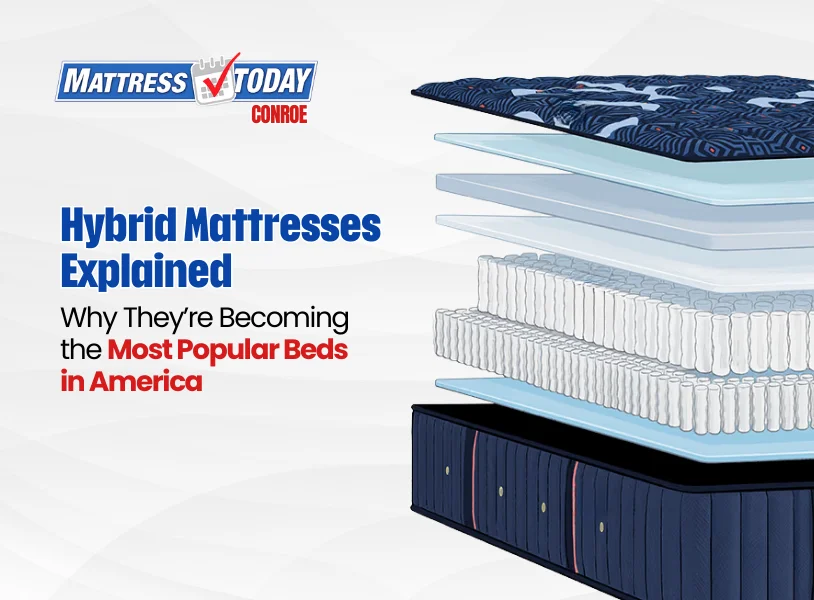
A hybrid mattress is built using multiple support systems rather than relying on a single material.
At the base, there is usually a pocketed coil system. These individually wrapped springs move independently, offering structured support and improved airflow. Above that sit layers of foam or latex designed for cushioning and pressure relief.
So instead of choosing between bounce and contouring, sleepers get both.
Support without stiffness.
Softness without sinking too deeply.
The hybrid mattress guide usually describes this as balance. But balance feels abstract until you lie down and notice how evenly weight distributes across the surface.
There is resistance. But also cushioning.
Support Feels Different With Hybrid Construction
Traditional spring mattresses distribute weight through interconnected coils. Pressure in one area often affects surrounding sections. Movement travels easily across the surface.
Foam mattresses absorb pressure locally but sometimes lack push back support, especially for heavier sleepers.
Hybrid designs change that interaction.
Pocketed coils respond independently to body weight, adjusting to pressure points without pulling the entire surface downward. Foam layers above soften contact areas while coils maintain structural integrity beneath.
The result feels stable without being rigid.
For people with back discomfort or posture concerns, this combination often feels more natural.
Pressure Relief Without the “Stuck” Feeling
Memory foam gained popularity for its contouring behaviour. It adapts closely to body shape, reducing pressure around shoulders and hips.
But some sleepers dislike the sinking sensation. Turning becomes slower. Movement feels restricted. Warmth builds through the night.
Hybrid mattresses reduce that intensity.
Foam layers still cushion the body, but underlying coils create responsiveness. Movement feels easier. Surfaces adjust quickly rather than holding impressions for long.
This responsiveness appeals to combination sleepers who shift positions frequently.
Comfort feels adaptive rather than engulfing.
Temperature Regulation Improves Noticeably
Heat retention is a common complaint with dense foam mattresses.
Airflow becomes restricted when foam layers trap warmth around the body. In warmer climates especially, this can disturb sleep cycles.
Hybrid mattresses introduce ventilation naturally through coil systems. Air circulates between springs, releasing trapped heat more efficiently. Many designs also include breathable comfort layers to improve cooling further.
The difference is not dramatic at first touch. But over several hours, temperature balance affects sleep quality significantly.
Cooler surfaces help maintain uninterrupted rest.
Motion Isolation Still Remains Strong
One advantage of foam mattresses is motion absorption. Movement on one side rarely disturbs the other.
Hybrids manage this differently.
Pocketed coils isolate motion by moving independently rather than transferring energy across the mattress. Foam layers above further dampen surface disturbance.
Couples often find hybrids offer a middle ground. Enough stability to prevent excessive movement transfer while maintaining responsiveness.
Sleep feels shared but undisturbed.
Edge Support Feels More Secure
Sitting or sleeping near mattress edges reveals structural differences quickly
Foam mattresses sometimes compress noticeably along edges, creating a sinking sensation. Traditional spring mattresses maintain stronger perimeter stability.
Hybrid mattresses often reinforce edges with firmer coils or denser foam rails. This creates a more secure boundary.
Getting in and out of bed feels easier. Sleeping near the edge feels stable rather than precarious.
Edge support may seem minor until it becomes part of daily routine.
Durability Balances Material Stress
Mattresses experience repeated compression nightly. Over time, materials fatigue.
Foam layers alone may soften unevenly. Springs alone may lose resilience under concentrated pressure.
Hybrid construction distributes stress across multiple systems. Coils absorb structural load while foam manages surface comfort. This balance can extend mattress lifespan compared to single material designs.
Durability varies by quality, but structural diversity supports longevity.
Comfort Preferences Become More Flexible
Different sleepers prefer different firmness levels.
Hybrids accommodate varied preferences through layered design. Softer foam layers can sit above firmer coil systems, creating a blend that feels plush yet supportive.
Manufacturers can adjust material combinations easily, offering multiple comfort options within hybrid categories.
This flexibility helps shoppers narrow choices more confidently.
A hybrid mattress guide often emphasises adaptability because construction allows customisation without extreme design shifts.
Why Hybrids Appeal to Modern Buyers
Sleep expectations have evolved.
Softness without sinking deeply.
Hybrid mattresses align with these blended expectations.
They reflect how buyers think now. Not in extremes, but in combinations.
And as online searches for “mattress near me” grow, hybrids often appear prominently because they address common sleep concerns simultaneously rather than specialising narrowly.
Practical Considerations Before Choosing
Hybrids tend to be heavier than foam mattresses due to coil systems. Moving them requires more effort. They may also cost more depending on material quality.
However, buyers often consider the cost reasonable for balanced performance.
Testing comfort remains important. Sleeping position, body weight and firmness preference influence experience regardless of mattress type.
Hybrids simplify decisions but do not eliminate personal variation.
Final Reflection
Hybrid mattresses bring together spring support and foam comfort in a way that feels balanced rather than extreme.
They offer pressure relief without excessive sinking, airflow without sacrificing cushioning and stability without stiffness.
Hybrid mattress benefits emerge gradually through consistent sleep comfort rather than dramatic first impressions.
For many households, they represent practical compromise rather than luxury upgrade.
And that balance is precisely why hybrid beds are becoming one of the most popular mattress choices across America.